
Decay announces itself eventually. Tooth wear doesn't. It takes years, it rarely hurts until late, and because it happens to everyone a little, nobody notices it happening to them a lot.
The thing worth knowing up front: enamel does not grow back. There is no treatment that regenerates it, no toothpaste that rebuilds it, and no whitening that replaces it. Everything we can do about wear is either stopping the cause or replacing what's gone with something artificial. That's why this is the one problem in dentistry where catching it early is not a marketing line but the entire game.
Rather more common than you'd guess
In the clinical examinations for the Adult Oral Health Survey 2023, erosive tooth wear was recorded in 71.2% of adults examined in England. For 22.2%, the worst affected surface had lost less than half its hard tissue; for 4.5%, a surface had lost half or more.
Go back to the 2009 Adult Dental Health Survey and the pattern is the same: around 77% of adults with their own teeth had some wear on their front teeth, 15% moderate and 2% severe, with moderate wear up several percentage points on the survey a decade earlier.
Wear accumulates and doesn't reverse, which means the number that matters isn't how much you have, but how fast you're getting it.
Three different processes, one word
"Wear" gets used for three quite separate things, and telling them apart is what decides the treatment.
| What causes it | What it looks like | |
|---|---|---|
| Erosion | Acid, from diet, reflux or vomiting | Thin, glassy, see-through edges; shallow cupped hollows on the biting surfaces; fillings standing proud of the tooth around them |
| Attrition | Tooth against tooth — grinding and clenching | Flat, polished facets that match up between upper and lower teeth; shortened front teeth; chipped edges; cracked cusps |
| Abrasion | Something else against the tooth — hard brushing, abrasive pastes, holding pins or nails | Notches at the gumline, usually worse on one side than the other |
Most real mouths are a mixture. And the combination matters more than either part: enamel softened by acid abrades and grinds away far faster than enamel that isn't. Somebody who sips fizzy drinks all afternoon and clenches at night isn't running two problems in parallel, they're running one that multiplies.

Grinding: what's actually known
Bruxism is common enough that most people have some of it. A global meta-analysis published in 2024 put sleep bruxism at around 21% and awake bruxism at around 23% across adult populations, and a separate meta-analysis of awake bruxism drawing on nearly 40,000 people found a mean prevalence of about 21%. Estimates vary widely depending on how it's measured — self-report, examination or sleep study — which is worth remembering whenever you see a confident single number.
The two types behave differently. Awake bruxism, mostly clenching, is closely associated with stress, anxiety and how much tension you carry generally. Sleep bruxism sits nearer to sleep arousal, and can be associated with disturbed breathing during sleep, reflux, alcohol, caffeine, nicotine and some medications.
Signs to take seriously: waking with an aching jaw or a headache at the temples, tenderness just in front of the ear, a ridged line along the inside of the cheek, a scalloped edge to the tongue, or teeth that feel oddly tired first thing. A partner telling you they can hear it is the least reliable sign, since plenty of grinding is silent.
Splints: armour, not a cure
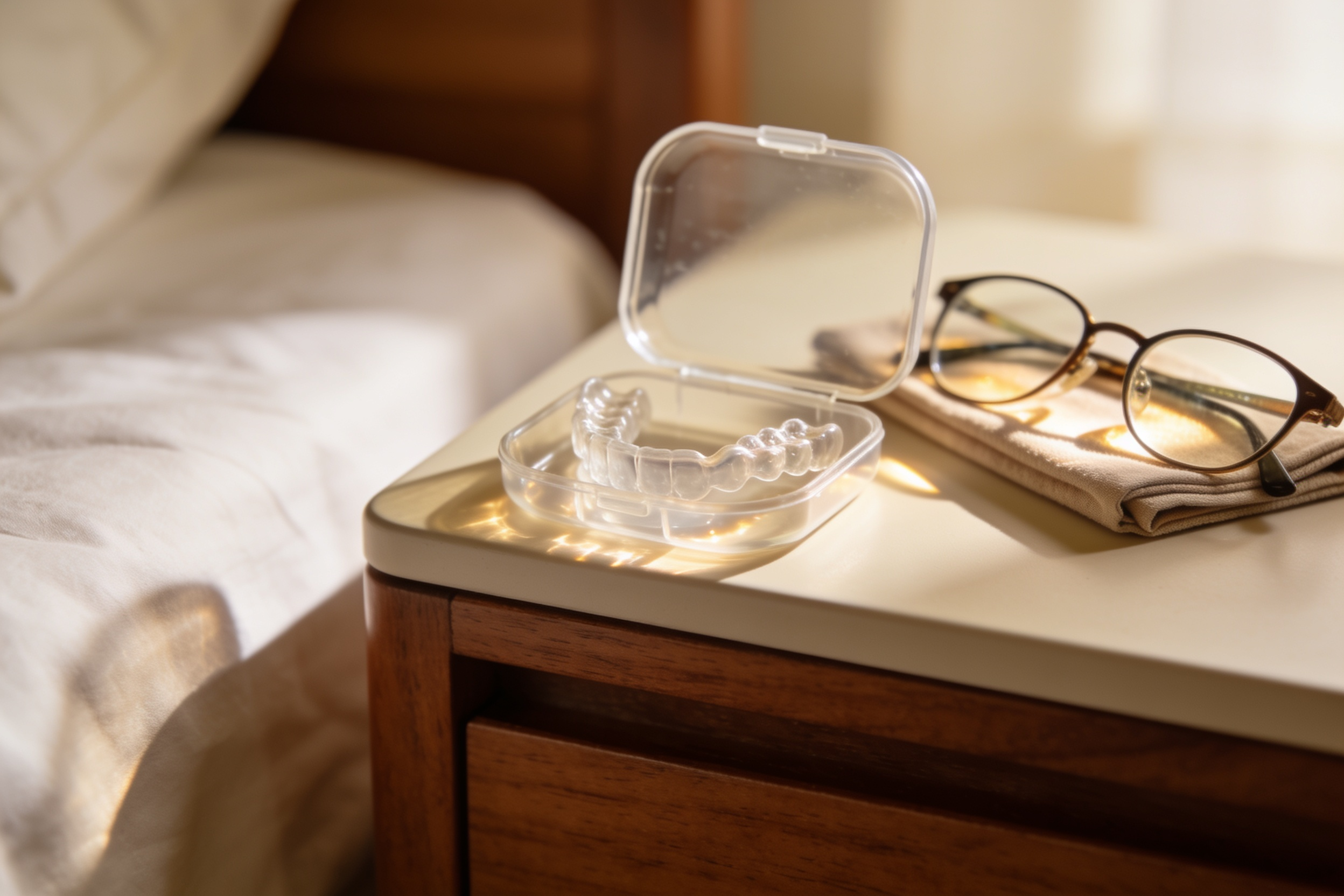
A well-made night guard takes the damage instead of your teeth, and that alone justifies it. Systematic reviews of sleep bruxism management find that oral appliances tend to reduce the number of grinding episodes, but the trials are small and short, and no appliance reliably stops someone grinding. It protects; it doesn't retrain.
Two things I'd steer you away from. Boil-in-the-bag guards from the internet fit approximately, can hold the jaw in a position that makes matters worse, and are often chewed through in months. And be wary of anyone offering to permanently adjust or rebuild your bite as a cure for grinding — the evidence for that is thin, and it's irreversible.
Acid: it's frequency, not volume
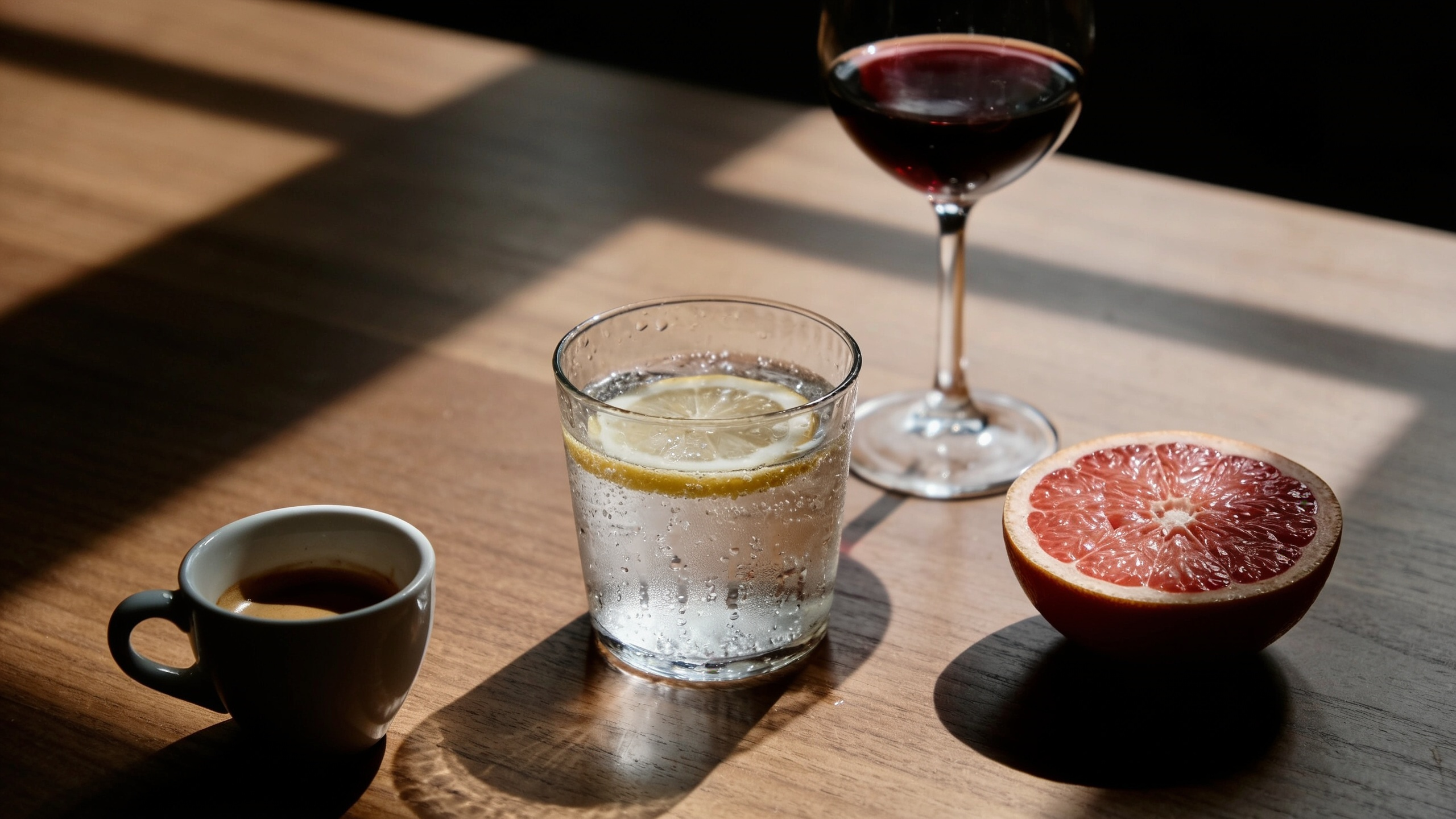
This is the bit most people have backwards. One glass of orange juice with breakfast is a single acid attack that saliva can deal with. The same glass sipped over two hours at a desk is a two-hour attack, and saliva never gets ahead of it. How often acid touches your teeth matters more than how much of it there is.
The usual sources: fizzy drinks including the sugar-free ones, energy and sports drinks, citrus fruit and hot water with lemon, vinegar and dressings, kombucha, and wine. Sparkling water is mildly acidic and a long way down the list — it's not the villain the internet has made of it.
Acid also comes from inside. Reflux, especially the silent night-time kind, produces a distinctive pattern of wear on the inner surfaces of the upper teeth, and dentists often spot it before anyone else does. If that's what your teeth are showing, it's worth a conversation with your GP, because protecting the teeth without addressing the acid is a losing arrangement.
Vomiting does the same thing, whether it's pregnancy sickness or an eating disorder. If that's part of your life, you can say so, and it won't become a bigger conversation than you want it to be. There is a lot we can do to protect teeth in the meantime, and rinsing with water rather than brushing straight afterwards is the first of it.
One more: a dry mouth removes your main defence. Saliva buffers acid and helps enamel re-harden. Medications, mouth-breathing, and heavy endurance training all reduce it.
What to do about it, starting today
- Don't brush straight after anything acidic. Rinse with plain water and give it time. The commonly quoted wait is 30 to 60 minutes; the evidence behind the exact number is softer than the confidence with which it's repeated, but waiting costs you nothing.
- Fluoride toothpaste, spit, don't rinse. Where wear is active, a higher-strength prescription toothpaste is worth asking about.
- Keep acidic drinks to mealtimes, and water in between. Use a straw for the ones you're not giving up.
- Sugar-free gum after meals. It stimulates saliva, which is the closest thing to a repair mechanism your enamel has.
- Soft brush, light pressure. Softened enamel abrades very easily; charcoal and "whitening" pastes with high abrasivity are a bad combination with erosion.
- If your jaw aches in the morning, say so rather than waiting to be asked, and ask about a properly made guard.
- Get photographs and a scan on record now. Wear is only diagnosable as progressing if there's something to compare against. A scan today is the cheapest thing in this article.
When it does need fixing
The instinct — including some dentists' instinct — is to crown worn front teeth. I'd argue against it in most cases. Crowns need tooth removed to make room, and a worn tooth is precisely the tooth with nothing to spare.
The better first answer is usually additive: composite built onto the worn edges to restore length and protect what's left, without drilling into healthy tooth. It's the same material and much the same technique as edge bonding, used restoratively rather than cosmetically, and it's essentially reversible.
Sometimes there isn't room to rebuild, because as teeth wear the jaw compensates and the space closes up. Creating that space — with aligners, or by rebuilding in a planned sequence — is why straightening and restorative work often get planned together rather than one after the other.
The order never changes though: find the cause, stop the cause, protect, then rebuild. Rebuilding onto an active cause fails, and it fails expensively.
Two things people get told that aren't right
"It's only cosmetic." Worn teeth get sensitive, they chip, and eventually they crack in ways that cost a great deal more to deal with than they would have at the point somebody first noticed the edges going see-through.
"Whitening will sort the colour." The yellowing that comes with wear is dentine showing through thinning enamel, not a stain sitting on top of it. Whitening works on natural tooth colour and does nothing for lost enamel — worth knowing before you spend money on it, and worth reading alongside what whitening can and can't do.
Resources
- Adult Oral Health Survey 2023: periodontal disease and erosive tooth wear among adults in England
- Epidemiology, aetiology and prevention of tooth wear — British Dental Journal
- Global prevalence of sleep bruxism and awake bruxism: systematic review and meta-analysis
- Prevalence of awake bruxism in the adult population: systematic review and meta-analysis
- Management of sleep bruxism in adults: a systematic review
Teeth looking shorter than they used to? Bring a photograph of yourself from ten years ago; it's often more diagnostic than anything else in the room. Book a free 15-minute phone or video consultation with Jack Dowling, private dentist in Newcastle, and we'll work out what's causing it before anyone talks about rebuilding it.
Wondering what’s right for your smile?
Book your free consultation →